Tokyo Cooking Class
ushi Recipe Ingredients (Serves 4) Rice (for sushi rice) - 2 cups (approx. 360g) Water - to taste Vinegar - 50ml 3 tablespoons Sugar - 1 teaspoon Salt - to taste Fish for sashimi (e.g. salmon, tuna, sea bream, shrimp, salmon roe, etc.) - to taste Nori (nori) - 4 pieces Cucumber - 1 (sliced thinly) Avocado (optional) - 1 (thinly sliced) A little wasabi Soy sauce - to taste (for serving) Directions Prepare the sushi rice: Lightly wash the rice and soak it in water for 30 minutes to an hour. Cook the rice in a rice cooker. It is best to use a little less water than normal rice (about 1.1 times the amount of water compared to the amount of rice). Once the rice is cooked, add the sushi vinegar made by mixing the vinegar, sugar, and salt while it is still hot, and mix with a rice paddle. Let it cool. Preparing the Toppings: Thinly slice the fish for sashimi. You can use any type of fish, but tuna or salmon are popular. Thinly slice the cucumber and avocado. Making the Sushi Rolls: Place a sheet of nori seaweed on a rolling mat. Spread the sushi rice evenly on top of the nori, leaving about 1cm of space at the edges. Arrange your desired ingredients (fish, cucumber, avocado, wasabi, etc.) on top of the sushi rice. Using the mat, roll the sushi rolls, enclosing the ingredients. Lightly press down at the end to make a tight roll. Cutting: Cut the sushi rolls into bite-sized pieces. Wiping the knife with a wet cloth while cutting will help the sushi stay together. Done! Place the cut sushi on a plate and serve with wasabi or soy sauce, if desired. Additional information: How to make sushi vinegar: Mix 50ml of vinegar, 3 tablespoons of sugar, and 1 teaspoon of salt and heat until the sugar dissolves (be careful not to boil). It is very important to use fresh fish for sushi. Choose fresh fish that is suitable for sashimi. There is not only rolled sushi (makizushi), but also nigiri sushi (sushi made by hand). For nigiri sushi, simply form sushi rice into small balls and place the fish on top.
Cooking Class Menu
250g minced pork (or chicken) 1/4 head cabbage (chopped) 1 bunch chives (chopped) 1 scallion (chopped) 1 clove ginger (chopped) 1 clove garlic (chopped) 1 tablespoon soy sauce 1 tablespoon sesame oil A pinch of salt A pinch of pepper 30 gyoza wrappers Vegetable oil (as needed) Water (as needed) Directions: Prepare the filling: Chop the cabbage, sprinkle with a little salt, leave for about 10 minutes, then squeeze out the water. Finely chop the chives, green onions, ginger, and garlic. To make the filling: Put the minced pork in a bowl and add the cabbage, chives, green onions, ginger, and garlic. Add soy sauce, sesame oil, salt, and pepper and knead with your hands until well mixed. Place 1-2 teaspoons of filling in the center of the gyoza skin, then add water around the edges of the skin and fold it in half. Press the edges firmly and create pleats to wrap the gyoza. Heat salad oil in a frying pan and arrange the gyoza. Cook over medium heat until the bottoms are golden brown. Once cooked, add about 50ml of water to the pan, cover, and steam. Once the water has evaporated, cook a little longer to make them crispy. Done! Place the cooked gyoza on a plate and enjoy with vinegar or soy sauce to taste.
Cooking Class Information
Origin of Gyoza: Chinese Origins. Gyoza (dumplings) originated in China. Known as "jiaozi" in China, they originated over 1,800 years ago. During the Han Dynasty (206 BC - 220 AD), gyoza were primarily boiled and eaten as "sui-jiaozi." Pork and beef were often used as fillings, and many variations exist in China today. How they arrived in Japan: Gyoza were introduced to Japan in the early 20th century, but they became especially popular after World War II with Chinese immigrants and returning soldiers. At the time, exchanges between Japan and China increased, and Chinese gyoza were introduced to Japan. Evolution in Japan: While Chinese gyoza are primarily boiled or steamed, in Japan, this process has changed slightly, with pan-fried gyoza becoming increasingly popular, particularly as "yaki-gyoza." This style of gyoza is characterized by a crispy bottom and a fluffy top. The Popularity of Gyoza in Japan After World War II, gyoza became a popular dish in homes and restaurants in Japan, especially during the period of rapid economic growth in the 1950s and 1960s. The number of gyoza specialty restaurants also increased, and gyoza has now become a staple in izakayas and home cooking. Differences between Chinese and Japanese gyoza: Size and Shape: Japanese gyoza are smaller and have thinner skin than their Chinese counterparts. Cooking Method: In China, gyoza are primarily boiled or steamed, while in Japan, pan-fried gyoza are more common, favoring a crispy pan-fried style. Ingredients: Chinese gyoza use a variety of ingredients, including pork, beef, chicken, mushrooms, and vegetables. Japanese gyoza typically contain ground pork, with cabbage, chives, green onions, garlic, and ginger added, and seasoned with soy sauce and sesame oil. Sauce: In China, soy sauce is often used when eating gyoza, but in Japan, it is common to eat gyoza with a special sauce made by adding soy sauce, vinegar, and chili oil. Gyoza Day in JapanIn Japan, there is a day called Gyoza Day (Gyoza no Hi), which is celebrated every year on February 24th. This day was chosen as Gyoza Day because the numbers "2" and "4" sound similar to the sounds "gyo" and
About Host

Yuka
Hi im Yoka i live in Tokyo and im half Japanese and British come back Japan 1 year
Area
The closest station
nishikoyama Station
How to get to the station?
From tokyo station : 15mins
Free pick up service
This host can pick up you for free from the closest station!
Exact location provided after booking.
FAQ about ushi Recipe Ingredients (Serves 4) Rice (for sushi rice) - 2 cups (approx. 360g) Water - to taste Vinegar - 50ml 3 tablespoons Sugar - 1 teaspoon Salt - to taste Fish for sashimi (e.g. salmon, tuna, sea bream, shrimp, salmon roe, etc.) - to taste Nori (nori) - 4 pieces Cucumber - 1 (sliced thinly) Avocado (optional) - 1 (thinly sliced) A little wasabi Soy sauce - to taste (for serving) Directions Prepare the sushi rice: Lightly wash the rice and soak it in water for 30 minutes to an hour. Cook the rice in a rice cooker. It is best to use a little less water than normal rice (about 1.1 times the amount of water compared to the amount of rice). Once the rice is cooked, add the sushi vinegar made by mixing the vinegar, sugar, and salt while it is still hot, and mix with a rice paddle. Let it cool. Preparing the Toppings: Thinly slice the fish for sashimi. You can use any type of fish, but tuna or salmon are popular. Thinly slice the cucumber and avocado. Making the Sushi Rolls: Place a sheet of nori seaweed on a rolling mat. Spread the sushi rice evenly on top of the nori, leaving about 1cm of space at the edges. Arrange your desired ingredients (fish, cucumber, avocado, wasabi, etc.) on top of the sushi rice. Using the mat, roll the sushi rolls, enclosing the ingredients. Lightly press down at the end to make a tight roll. Cutting: Cut the sushi rolls into bite-sized pieces. Wiping the knife with a wet cloth while cutting will help the sushi stay together. Done! Place the cut sushi on a plate and serve with wasabi or soy sauce, if desired. Additional information: How to make sushi vinegar: Mix 50ml of vinegar, 3 tablespoons of sugar, and 1 teaspoon of salt and heat until the sugar dissolves (be careful not to boil). It is very important to use fresh fish for sushi. Choose fresh fish that is suitable for sashimi. There is not only rolled sushi (makizushi), but also nigiri sushi (sushi made by hand). For nigiri sushi, simply form sushi rice into small balls and place the fish on top. | Cooking class by Yuka
-
How much does it cost to join ushi Recipe Ingredients (Serves 4) Rice (for sushi rice) - 2 cups (approx. 360g) Water - to taste Vinegar - 50ml 3 tablespoons Sugar - 1 teaspoon Salt - to taste Fish for sashimi (e.g. salmon, tuna, sea bream, shrimp, salmon roe, etc.) - to taste Nori (nori) - 4 pieces Cucumber - 1 (sliced thinly) Avocado (optional) - 1 (thinly sliced) A little wasabi Soy sauce - to taste (for serving) Directions Prepare the sushi rice: Lightly wash the rice and soak it in water for 30 minutes to an hour. Cook the rice in a rice cooker. It is best to use a little less water than normal rice (about 1.1 times the amount of water compared to the amount of rice). Once the rice is cooked, add the sushi vinegar made by mixing the vinegar, sugar, and salt while it is still hot, and mix with a rice paddle. Let it cool. Preparing the Toppings: Thinly slice the fish for sashimi. You can use any type of fish, but tuna or salmon are popular. Thinly slice the cucumber and avocado. Making the Sushi Rolls: Place a sheet of nori seaweed on a rolling mat. Spread the sushi rice evenly on top of the nori, leaving about 1cm of space at the edges. Arrange your desired ingredients (fish, cucumber, avocado, wasabi, etc.) on top of the sushi rice. Using the mat, roll the sushi rolls, enclosing the ingredients. Lightly press down at the end to make a tight roll. Cutting: Cut the sushi rolls into bite-sized pieces. Wiping the knife with a wet cloth while cutting will help the sushi stay together. Done! Place the cut sushi on a plate and serve with wasabi or soy sauce, if desired. Additional information: How to make sushi vinegar: Mix 50ml of vinegar, 3 tablespoons of sugar, and 1 teaspoon of salt and heat until the sugar dissolves (be careful not to boil). It is very important to use fresh fish for sushi. Choose fresh fish that is suitable for sashimi. There is not only rolled sushi (makizushi), but also nigiri sushi (sushi made by hand). For nigiri sushi, simply form sushi rice into small balls and place the fish on top.?
It costs 6000 per person.
-
What is the maximum capacity of Yuka's cooking class?
Up to 2 people can join Yuka's cooking class.
-
Is ushi Recipe Ingredients (Serves 4) Rice (for sushi rice) - 2 cups (approx. 360g) Water - to taste Vinegar - 50ml 3 tablespoons Sugar - 1 teaspoon Salt - to taste Fish for sashimi (e.g. salmon, tuna, sea bream, shrimp, salmon roe, etc.) - to taste Nori (nori) - 4 pieces Cucumber - 1 (sliced thinly) Avocado (optional) - 1 (thinly sliced) A little wasabi Soy sauce - to taste (for serving) Directions Prepare the sushi rice: Lightly wash the rice and soak it in water for 30 minutes to an hour. Cook the rice in a rice cooker. It is best to use a little less water than normal rice (about 1.1 times the amount of water compared to the amount of rice). Once the rice is cooked, add the sushi vinegar made by mixing the vinegar, sugar, and salt while it is still hot, and mix with a rice paddle. Let it cool. Preparing the Toppings: Thinly slice the fish for sashimi. You can use any type of fish, but tuna or salmon are popular. Thinly slice the cucumber and avocado. Making the Sushi Rolls: Place a sheet of nori seaweed on a rolling mat. Spread the sushi rice evenly on top of the nori, leaving about 1cm of space at the edges. Arrange your desired ingredients (fish, cucumber, avocado, wasabi, etc.) on top of the sushi rice. Using the mat, roll the sushi rolls, enclosing the ingredients. Lightly press down at the end to make a tight roll. Cutting: Cut the sushi rolls into bite-sized pieces. Wiping the knife with a wet cloth while cutting will help the sushi stay together. Done! Place the cut sushi on a plate and serve with wasabi or soy sauce, if desired. Additional information: How to make sushi vinegar: Mix 50ml of vinegar, 3 tablespoons of sugar, and 1 teaspoon of salt and heat until the sugar dissolves (be careful not to boil). It is very important to use fresh fish for sushi. Choose fresh fish that is suitable for sashimi. There is not only rolled sushi (makizushi), but also nigiri sushi (sushi made by hand). For nigiri sushi, simply form sushi rice into small balls and place the fish on top. available for vegetarians?
Yes, ushi Recipe Ingredients (Serves 4) Rice (for sushi rice) - 2 cups (approx. 360g) Water - to taste Vinegar - 50ml 3 tablespoons Sugar - 1 teaspoon Salt - to taste Fish for sashimi (e.g. salmon, tuna, sea bream, shrimp, salmon roe, etc.) - to taste Nori (nori) - 4 pieces Cucumber - 1 (sliced thinly) Avocado (optional) - 1 (thinly sliced) A little wasabi Soy sauce - to taste (for serving) Directions Prepare the sushi rice: Lightly wash the rice and soak it in water for 30 minutes to an hour. Cook the rice in a rice cooker. It is best to use a little less water than normal rice (about 1.1 times the amount of water compared to the amount of rice). Once the rice is cooked, add the sushi vinegar made by mixing the vinegar, sugar, and salt while it is still hot, and mix with a rice paddle. Let it cool. Preparing the Toppings: Thinly slice the fish for sashimi. You can use any type of fish, but tuna or salmon are popular. Thinly slice the cucumber and avocado. Making the Sushi Rolls: Place a sheet of nori seaweed on a rolling mat. Spread the sushi rice evenly on top of the nori, leaving about 1cm of space at the edges. Arrange your desired ingredients (fish, cucumber, avocado, wasabi, etc.) on top of the sushi rice. Using the mat, roll the sushi rolls, enclosing the ingredients. Lightly press down at the end to make a tight roll. Cutting: Cut the sushi rolls into bite-sized pieces. Wiping the knife with a wet cloth while cutting will help the sushi stay together. Done! Place the cut sushi on a plate and serve with wasabi or soy sauce, if desired. Additional information: How to make sushi vinegar: Mix 50ml of vinegar, 3 tablespoons of sugar, and 1 teaspoon of salt and heat until the sugar dissolves (be careful not to boil). It is very important to use fresh fish for sushi. Choose fresh fish that is suitable for sashimi. There is not only rolled sushi (makizushi), but also nigiri sushi (sushi made by hand). For nigiri sushi, simply form sushi rice into small balls and place the fish on top. has a vegetarian option.
-
Is ushi Recipe Ingredients (Serves 4) Rice (for sushi rice) - 2 cups (approx. 360g) Water - to taste Vinegar - 50ml 3 tablespoons Sugar - 1 teaspoon Salt - to taste Fish for sashimi (e.g. salmon, tuna, sea bream, shrimp, salmon roe, etc.) - to taste Nori (nori) - 4 pieces Cucumber - 1 (sliced thinly) Avocado (optional) - 1 (thinly sliced) A little wasabi Soy sauce - to taste (for serving) Directions Prepare the sushi rice: Lightly wash the rice and soak it in water for 30 minutes to an hour. Cook the rice in a rice cooker. It is best to use a little less water than normal rice (about 1.1 times the amount of water compared to the amount of rice). Once the rice is cooked, add the sushi vinegar made by mixing the vinegar, sugar, and salt while it is still hot, and mix with a rice paddle. Let it cool. Preparing the Toppings: Thinly slice the fish for sashimi. You can use any type of fish, but tuna or salmon are popular. Thinly slice the cucumber and avocado. Making the Sushi Rolls: Place a sheet of nori seaweed on a rolling mat. Spread the sushi rice evenly on top of the nori, leaving about 1cm of space at the edges. Arrange your desired ingredients (fish, cucumber, avocado, wasabi, etc.) on top of the sushi rice. Using the mat, roll the sushi rolls, enclosing the ingredients. Lightly press down at the end to make a tight roll. Cutting: Cut the sushi rolls into bite-sized pieces. Wiping the knife with a wet cloth while cutting will help the sushi stay together. Done! Place the cut sushi on a plate and serve with wasabi or soy sauce, if desired. Additional information: How to make sushi vinegar: Mix 50ml of vinegar, 3 tablespoons of sugar, and 1 teaspoon of salt and heat until the sugar dissolves (be careful not to boil). It is very important to use fresh fish for sushi. Choose fresh fish that is suitable for sashimi. There is not only rolled sushi (makizushi), but also nigiri sushi (sushi made by hand). For nigiri sushi, simply form sushi rice into small balls and place the fish on top. available for vegans?
Yes, ushi Recipe Ingredients (Serves 4) Rice (for sushi rice) - 2 cups (approx. 360g) Water - to taste Vinegar - 50ml 3 tablespoons Sugar - 1 teaspoon Salt - to taste Fish for sashimi (e.g. salmon, tuna, sea bream, shrimp, salmon roe, etc.) - to taste Nori (nori) - 4 pieces Cucumber - 1 (sliced thinly) Avocado (optional) - 1 (thinly sliced) A little wasabi Soy sauce - to taste (for serving) Directions Prepare the sushi rice: Lightly wash the rice and soak it in water for 30 minutes to an hour. Cook the rice in a rice cooker. It is best to use a little less water than normal rice (about 1.1 times the amount of water compared to the amount of rice). Once the rice is cooked, add the sushi vinegar made by mixing the vinegar, sugar, and salt while it is still hot, and mix with a rice paddle. Let it cool. Preparing the Toppings: Thinly slice the fish for sashimi. You can use any type of fish, but tuna or salmon are popular. Thinly slice the cucumber and avocado. Making the Sushi Rolls: Place a sheet of nori seaweed on a rolling mat. Spread the sushi rice evenly on top of the nori, leaving about 1cm of space at the edges. Arrange your desired ingredients (fish, cucumber, avocado, wasabi, etc.) on top of the sushi rice. Using the mat, roll the sushi rolls, enclosing the ingredients. Lightly press down at the end to make a tight roll. Cutting: Cut the sushi rolls into bite-sized pieces. Wiping the knife with a wet cloth while cutting will help the sushi stay together. Done! Place the cut sushi on a plate and serve with wasabi or soy sauce, if desired. Additional information: How to make sushi vinegar: Mix 50ml of vinegar, 3 tablespoons of sugar, and 1 teaspoon of salt and heat until the sugar dissolves (be careful not to boil). It is very important to use fresh fish for sushi. Choose fresh fish that is suitable for sashimi. There is not only rolled sushi (makizushi), but also nigiri sushi (sushi made by hand). For nigiri sushi, simply form sushi rice into small balls and place the fish on top. has a vegan option.
-
How to get to the place where ushi Recipe Ingredients (Serves 4) Rice (for sushi rice) - 2 cups (approx. 360g) Water - to taste Vinegar - 50ml 3 tablespoons Sugar - 1 teaspoon Salt - to taste Fish for sashimi (e.g. salmon, tuna, sea bream, shrimp, salmon roe, etc.) - to taste Nori (nori) - 4 pieces Cucumber - 1 (sliced thinly) Avocado (optional) - 1 (thinly sliced) A little wasabi Soy sauce - to taste (for serving) Directions Prepare the sushi rice: Lightly wash the rice and soak it in water for 30 minutes to an hour. Cook the rice in a rice cooker. It is best to use a little less water than normal rice (about 1.1 times the amount of water compared to the amount of rice). Once the rice is cooked, add the sushi vinegar made by mixing the vinegar, sugar, and salt while it is still hot, and mix with a rice paddle. Let it cool. Preparing the Toppings: Thinly slice the fish for sashimi. You can use any type of fish, but tuna or salmon are popular. Thinly slice the cucumber and avocado. Making the Sushi Rolls: Place a sheet of nori seaweed on a rolling mat. Spread the sushi rice evenly on top of the nori, leaving about 1cm of space at the edges. Arrange your desired ingredients (fish, cucumber, avocado, wasabi, etc.) on top of the sushi rice. Using the mat, roll the sushi rolls, enclosing the ingredients. Lightly press down at the end to make a tight roll. Cutting: Cut the sushi rolls into bite-sized pieces. Wiping the knife with a wet cloth while cutting will help the sushi stay together. Done! Place the cut sushi on a plate and serve with wasabi or soy sauce, if desired. Additional information: How to make sushi vinegar: Mix 50ml of vinegar, 3 tablespoons of sugar, and 1 teaspoon of salt and heat until the sugar dissolves (be careful not to boil). It is very important to use fresh fish for sushi. Choose fresh fish that is suitable for sashimi. There is not only rolled sushi (makizushi), but also nigiri sushi (sushi made by hand). For nigiri sushi, simply form sushi rice into small balls and place the fish on top. being held?
Please go to nishikoyama Station which takes 15 mins from tokyo station . Then Yuka (host) will pick you up there!
-
How long is this cooking class by Yuka?
Duration of this cooking class is 0.5 hours.
Additional cooking class information
-
Confirmation
You will receive the confirmation within 24 hours.
-
Payment



We accepts these cards on airKitchen.
-
Cancellation
Cancellations up to 48 hours prior to the class begins will be fully refunded by the airKitchen cancellation policy.



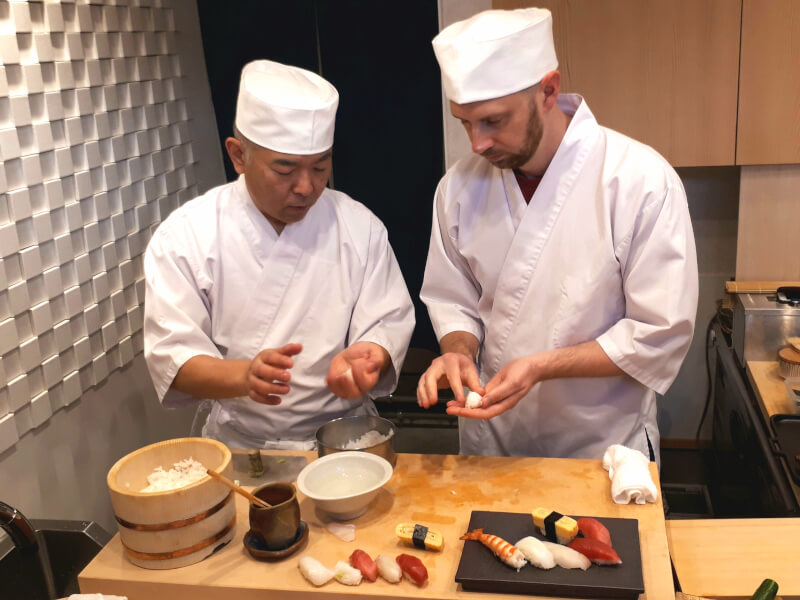

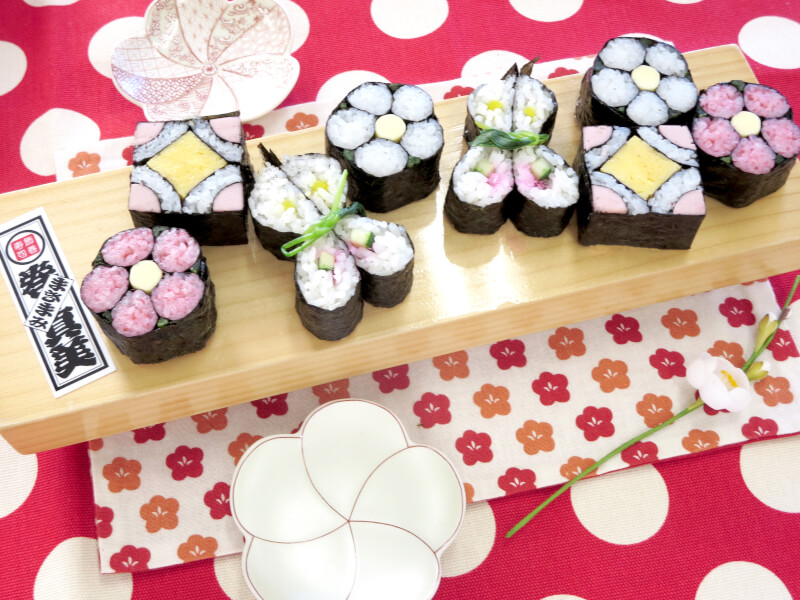



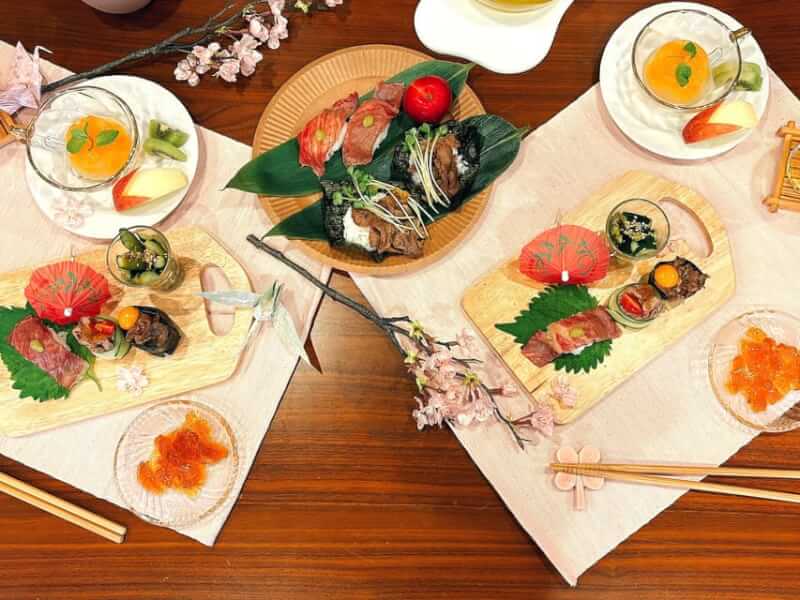

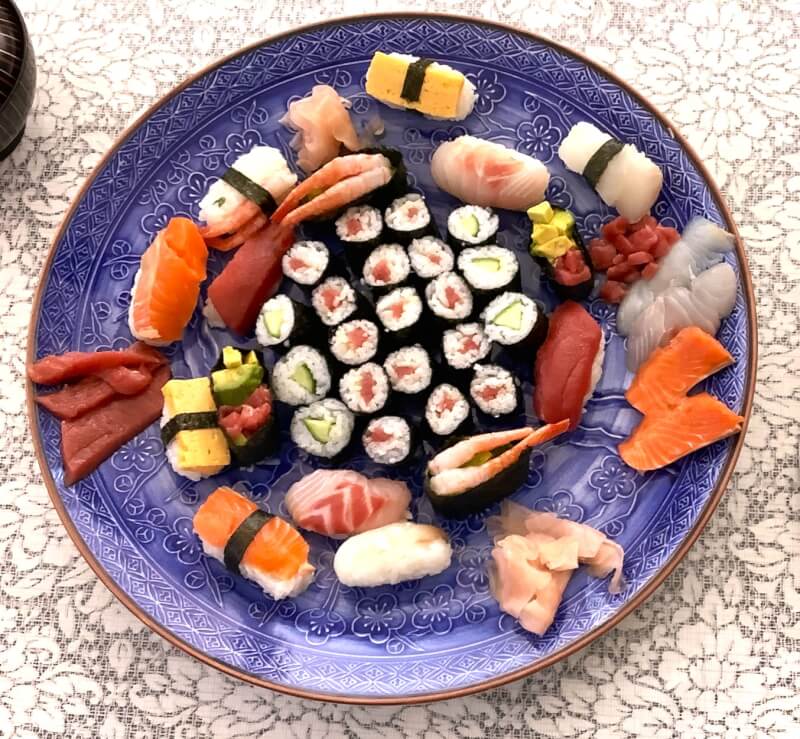
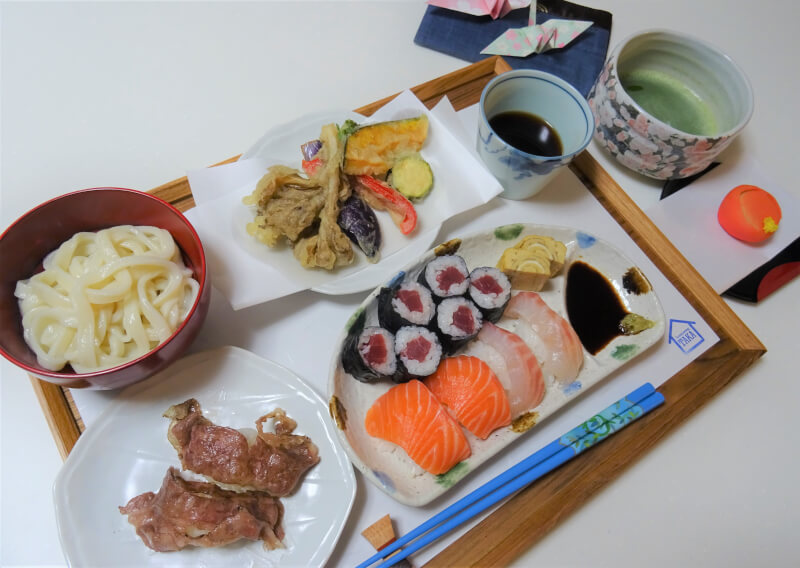

 Rice (for sushi rice) - 2 cups (approx. 360g) Water - to taste Vinegar - 50ml 3 tablespoons Sugar - 1 teaspoon Salt - to taste Fish for sashimi (e.g. salmon, tuna, sea bream, shrimp, salmon roe, etc.) - to taste Nori (nori) - 4 pieces Cucumber - 1 (sliced thinly) Avocado (optional) - 1 (thinly sliced) A little wasabi Soy sauce - to taste (for serving) Directions Prepare the sushi rice: Lightly wash the rice and soak it in water for 30 minutes to an hour. Cook the rice in a rice cooker. It is best to use a little less water than normal rice (about 1.1 times the amount of water compared to the amount of rice). Once the rice is cooked, add the sushi vinegar made by mixing the vinegar, sugar, and salt while it is still hot, and mix with a rice paddle. Let it cool. Preparing the Toppings: Thinly slice the fish for sashimi. You can use any type of fish, but tuna or salmon are popular. Thinly slice the cucumber and avocado. Making the Sushi Rolls: Place a sheet of nori seaweed on a rolling mat. Spread the sushi rice evenly on top of the nori, leaving about 1cm of space at the edges. Arrange your desired ingredients (fish, cucumber, avocado, wasabi, etc.) on top of the sushi rice. Using the mat, roll the sushi rolls, enclosing the ingredients. Lightly press down at the end to make a tight roll. Cutting: Cut the sushi rolls into bite-sized pieces. Wiping the knife with a wet cloth while cutting will help the sushi stay together. Done! Place the cut sushi on a plate and serve with wasabi or soy sauce, if desired. Additional information: How to make sushi vinegar: Mix 50ml of vinegar, 3 tablespoons of sugar, and 1 teaspoon of salt and heat until the sugar dissolves (be careful not to boil). It is very important to use fresh fish for sushi. Choose fresh fish that is suitable for sashimi. There is not only rolled sushi (makizushi), but also nigiri sushi (sushi made by hand). For nigiri sushi, simply form sushi rice into small balls and place the fish on top. | Cooking Class in Tokyo/Japan)